Robert Gordon: Black Slacks

Vain 1 jäljellä
Toimituskulut alk. 3,90€
Normaalihinta 17,00€

Maksutavat

Hyväksymme: Klarna (myös verkkopankki), Visa, Mastercard, American Express, UnionPay, Shop pay, Apple pay, Google pay tai IBAN siirrot pankkitilillemme.

Tuotetiedot

  • Kunto Uusi
  • Tyyppi CD
  • Tyyppi CD
  • Julkaisija Bear Family Records
  • SKU BCD 15489
  • Barcode 4000127154897
  • Artisti Robert Gordon
  • Lyhyt kuvaus CD with 12-page booklet, 25 single titles. Playing time approx. 66 minutes. When Robert Gordon burst onto the scene in late 1977 it seemed to presage a rockabilly revival. Perhaps more than anything else though, Gordon's accep-tance was a reaction to the sterility of pop music in the late '70s. In an era of overblown supergroups and nascent disco, it was profoundly refreshing to hear someone scream "My gal is red hot!" and catch the deathless refrain, "Your gal ain't doodley squat!" There never was a rockabilly revival - but then Gordon never was a rockabilly revivalist, although he certainly adopted some of the production values of early rock & roll: spontaneity, sparseness, visceral energy and absolute lack of pretension. The feel rather than precise re-creation was Gordon's goal, and it is a mark of his success that his music still sounds fresh and vital a decade or more later. The essentials of Gordon's career and his meeting with Link Wray were covered in the notes accompanying the first Bear Family retrospective of his work, 'Red Hot' (BCD 15446). Gordon grew up in the Washington, D.C. area and recalled to Dave Booth, "The first people who influenced me were Elvis Presley, Gene Vincent, Jack Scott, Wanda Jackson and Hank Williams." All of these artists, with the exception of Hank Williams, were very real to Link Wray who had worked with them or hung out with them. Thus the initial pairing of Gordon with Link Wray not only gave Gordon instant credibility but also a picker who was equally determined not to be cast simply as a revivalist. Of Gordon's early influences, Gene Vincent was paramount. "My introduction to Gene was 'Woman Love' and 'Be-Bop-A-Lula'," he recalled, "but there were so many other great songs that he did. He was a true rocker. Vocally he was my biggest influence. He wasn't a rockabilly. He was a bop cat. I try to get the Gene Vincent feeling with a heavier sound." Link Wray's connection to Vincent was more tangible; Vincent had played rhythm guitar with Wray and his brothers on live radio in Norfolk in 1949. And when it came time to cover Gene Vincent songs, Gordon and Wray did not head for the obvious but in-stead chose songs like Five Days, Five Days and other comparably obscure entries in the Vincent canon. Eddie Cochran was another artist whom both Gordon and Wray admired; Gor-don from afar - Wray from close at hand. "I did a show in Silver Spring, Maryland with Eddie in 1957," asserted Wray. "This was before 'Rumble.' We were a local added attraction on a bill with the Spaniels, Brook Benton and Terry & the Pirates. It snowed so hard that nobody showed up. We all sang hymns backstage. Eddie played piano. The following night the place was packed and we backed him up. He was a terrific musician." Gordon had seen the movie 'The Girl Can't Help It' on a number of occasions and revived Twen-ty Flight Rock from the movie as well as Summertime Blues. Gordon's first album attracted the attention of Bruce Springsteen. Not yet en-dowed with the godlike status he acquired through the subsequent decade, Springsteen sat in with the group at NYU and sang Heartbreak Hotel as a duet with Gordon. "We became quite good friends," recalled Gordon to Dave Booth, "and he gave me the song 'Fire.' He came down to the studio and played piano on the session. I think he was interested to see the way that Link and I worked - we did the album in four days." Although Springsteen's con-tribution to Gordon's version of Fire is barely noticeable, it ranks as among the more interesting of the Boss's ephemeral ventures. Just at the point when it seemed as though Gordon's career was taking off, it slowed down. One significant blow came when Fire was covered by the Pointer Sisters who took it to number two on the pop charts. Link Wray quit the line-up shortly after the second album was released in 1978 and was replaced by British session ace Chris Spedding. At the same time, Gordon left Private Stock Records, which was heading into bankruptcy, and signed with RCA, a move that brought him enormous personal gratification but steadily declining sales. Over the course of three RCA albums, Gordon recorded a greater variety of material; the oldies were less recognisable and there was an increasing num-ber of originals. Trying to define an original course for himself, Gordon lost his market. Those who had responded merely to the attitude that Gordon struck quickly moved on, leaving him with a core market that was insufficiently large to encourage RCA to retain his contract. RCA tried to steer Gordon towards the country market but their efforts met with scant success. Gordon's revival of Walk On By for example, only reached number 98 in the country charts. Chris Spedding quit Gordon's line-up in 1980 and was replaced by Danny Gatton, a D.C. legend for a number of years and technically the most adroit of the three eminent lead guitarists whom Gordon employed. A decade later, Gatton is starting to carve a solo career in the United States. His self produced and distributed solo albums have attracted critical acclaim but have covered too many musical bases to stand any chance of commercial success. Gatton has always had eclectic taste that embraced everything from blues and flamenco to the most accomplished jazz picking. He had just completed a five year gig with Roger Miller when Gordon called upon him to take Chris Spedding's place in the line-up. It was move that brought mixed blessings for Gatton who welcomed the steady paycheque but felt that he was working in an artistically arid environment. "I never played anything on anybody else's records where I really got to do anything," he asserted to 'Guitar Player' magazine. "I would do a session with Robert and they'd say, 'Hey, forget everything you know. Play like you're twelve years old. Don't play anything flashy. Just play real dumb.' That wasn't real satisfying to the soul." Despite his evident dissatisfaction, Gatton was a powerhouse on Gordon's last tours in support of his final RCA release. He was supported by Paul Shaf-fer, the Canadian keyboard player who as an actor so succinctly parodied
  • Julkaisuvuosi 1 989
  1. Summertime Blues
  2.  I Just Found Out
  3. Boppin' The Blues
  4. A Picture Of You
  5. I Just Met A Memory
  6. Am I Blue
  7. Walk On By
  8. Blue Christmas
  9. Fire
  10. Twenty Flight Rock
  11. But, But
  12. Sea Cruise
  13. Bad Boy
  14. Red Cadillac, And A Black Moustache
  15. Uptown
  16. Five Days, Five Days
  17. Are You Gonna Be The One
  18. Standing On The Outside Of Her Door
  19. Lover Boy
  20. Take Me Back
  21. Too Fast To Live, Too Young To Die
  22. Born To Lose
  23.  Is It Wrong (For Loving You)
  24. Torture
  25. Black Slacks (Live)

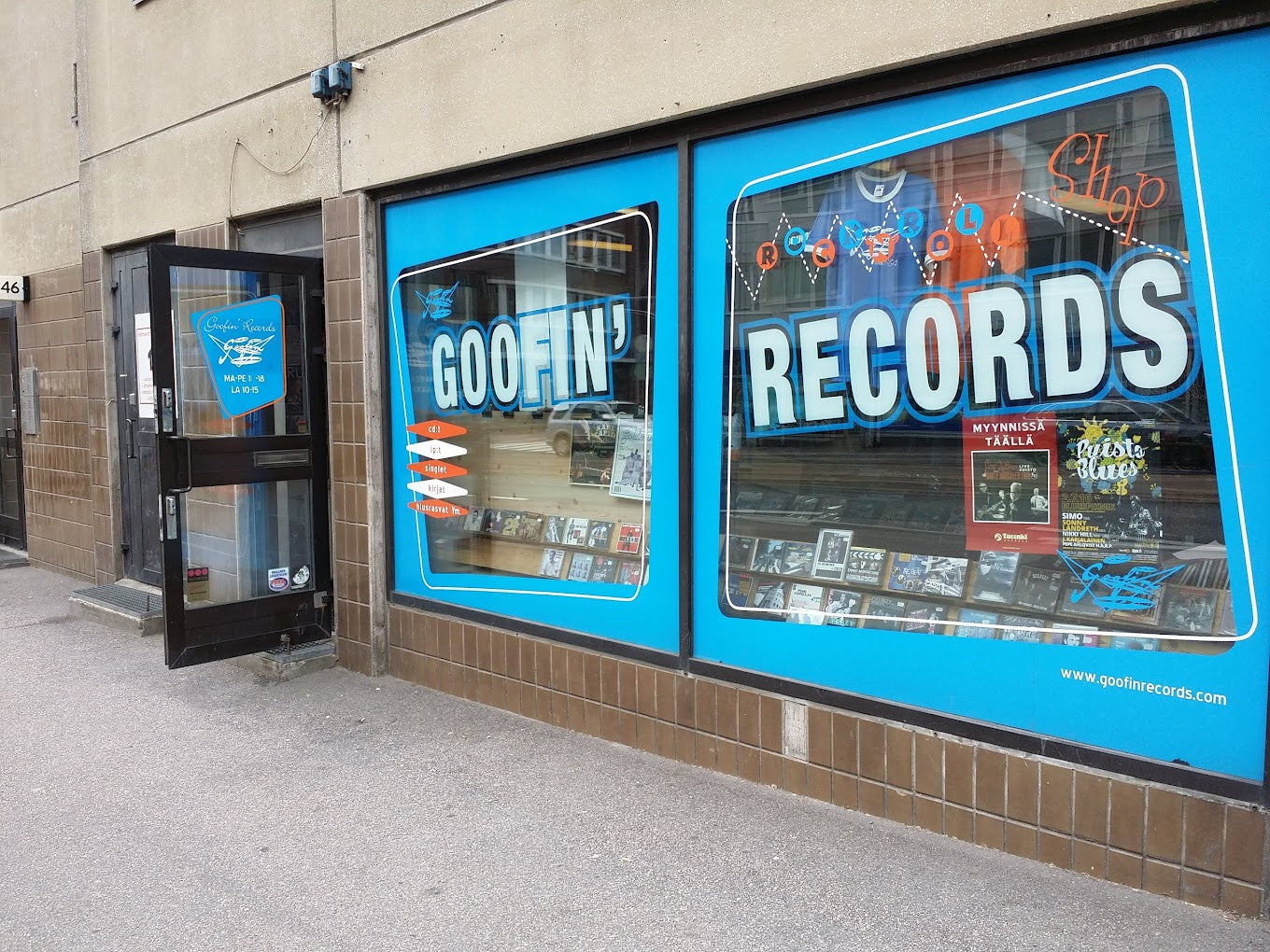
Goofin' Records Kivijalkaliike

Goofin' Records Kivijalkaliike

Sijainti

Mäntytie 7, 00270 Helsinki

Puh. 09 7733113

On the map